
Why Algeria’s 2026 Squad Keeps Surprising Rivals
The Algeria national football team is North Africa’s leading international sides, representing Algeria in FIFA and Confederation of African Football competitions, with its 2026 outlook shaped by Riyad...
Why Algeria’s 2026 Squad Keeps Surprising Rivals
The Algeria national football team is North Africa’s leading international sides, representing Algeria in FIFA and Confederation of African Football competitions, with its 2026 outlook shaped by Riyad Mahrez, Rayan Aït-Nouri, Aïssa Mandi, and a growing group of young European-based players. Algeria won the Africa Cup of Nations in 1990 and 2019, reached the FIFA World Cup knockout stage in 2014, and remains a dangerous opponent in African qualifying campaigns. The current squad profile combines experienced leadership with emerging talent such as Ibrahim Maza, while recent listed appearances show Mahrez contributing 2 goals and 1 assist across 4 matches. The team’s central challenge is consistency: Algeria can control possession and create chances, yet defensive transitions and tournament pressure have repeatedly punished them. The practical takeaway is simple: assess Algeria through midfield balance, wide progression, and lineup news rather than reputation alone.

Photo by Franco Monsalvo on Pexels
The Bottom Line
Algeria remains a technically gifted, tactically flexible national team with enough individual quality to challenge for major African honours and compete seriously in World Cup qualification. Its strongest formula is built around Mahrez’s creativity, Aït-Nouri’s aggressive left-side movement, a technically capable midfield, and defenders who can distribute under pressure. Its weakest formula appears when the full-backs advance simultaneously, the midfield loses protection, and opponents attack the space behind them. According to the Confederation of African Football, Algeria’s continental record includes two Africa Cup of Nations titles, but history is not a defensive midfielder and cannot stop a counterattack.
The less glamorous truth is that Algeria’s future will depend less on collecting famous names and more on role clarity. A squad can contain Mahrez, Maza, Houssem Aouar, Farès Chaïbi, and Ramiz Zerrouki and still look disjointed if the spacing between lines collapses. That has been the recurring headache: impressive technical ability, occasionally undermined by poor game management. Match Daily’s 2026 coverage therefore treats Algeria as a team of high upside rather than an automatic favourite, because football has a cruel habit of laughing at certainty.
Algeria at a glance
- Team: Algeria national football team
- Governing body: Fédération Algérienne de Football
- Confederation: Confederation of African Football
- Major titles: Africa Cup of Nations in 1990 and 2019
- Best World Cup result: Round of 16 in 2014
- Key established attacker: Riyad Mahrez
- Important emerging player: Ibrahim Maza
- Primary tactical question: Can Algeria protect itself after losing possession?
For historical context, the FIFA Algeria team profile provides competition information and official association details, while the Algerian Football Federation remains the main national authority for squad and federation announcements.
What Players Actually See
Players do not experience Algeria as a clean spreadsheet of rankings and transfer values. They experience a team that must shift between possession football, direct attacking, and defensive survival depending on the opponent, pitch, temperature, referee, and the emotional temperature of a stadium that can become a second tactical system. In practical terms, Algeria’s attackers often receive the ball in crowded zones, while its full-backs are asked to provide width and its holding midfielders must cover enormous distances. That sounds elegant until one misplaced pass turns into a three-on-two breakaway. I have watched enough matches to know that “dominant possession” can sometimes mean “we passed beautifully before conceding in transition.”
The squad listed for the 2026 cycle includes three goalkeepers—Melvin Mastil, Oussama Benbot, and Luca Zidane—alongside experienced defenders such as Mandi and Ramy Bensebaini. In midfield, Aouar, Chaïbi, Maza, Bentaleb, Boudaoui, and Zerrouki offer different combinations of ball progression, pressing, and control. The forward group includes Mahrez, Amine Gouiri, Anis Hadj Moussa, and Nadhir Benbouali. ESPN’s listed squad data records Mahrez with 4 appearances, 2 goals, and 1 assist in the referenced sample, while Maza registered 11 shots and 3 shots on target. Those figures are not prophecy, but they reveal where Algeria’s attacking responsibility is accumulating.
[Internal Link: Algeria player statistics and form guide]
The first-hand lesson from analysing Algeria is that the team’s best moments often begin on the flanks but finish through central combinations. Mahrez tends to attract defenders on the right, Aït-Nouri can carry the ball from the left, and midfielders then exploit the gap between the opposing full-back and central defender. The catch is obvious: if Algeria’s wide players remain isolated, the attack becomes predictable; if both full-backs push too high, the rest defence becomes a polite invitation. Listen up — this is the part that matters: Algeria’s chance creation and defensive vulnerability are often produced by the same aggressive structure.
Want a clearer breakdown of Algeria’s tournament outlook?
What Are the 3 Things That Matter Most?
The three decisive factors for Algeria are midfield protection, the condition of its senior creators, and the efficiency of its younger attackers. These factors determine whether Algeria controls matches productively or merely accumulates possession without enough threat. Mahrez’s influence remains valuable, but the team cannot sensibly ask a 35-year-old captain to solve every attacking problem for 90 minutes. Algeria needs multiple routes to goal, especially when opponents double-team Mahrez and block the right half-space.
1. Midfield balance
Zerrouki and Bentaleb can provide structure, but Algeria must decide whether it wants a single pivot or a double-pivot system against stronger opposition. Aouar brings movement and passing quality, while Chaïbi and Maza can attack space more aggressively. The risk is that creative midfielders drift forward together, leaving the centre exposed after turnovers. Data from match reports should therefore be read alongside formation and possession-loss locations, not just goals and assists.
2. Wide-player availability
Aït-Nouri gives Algeria a modern left-back profile: ball carrying, acceleration, and willingness to attack. Mahrez provides a slower but more deceptive form of progression, using changes of pace and his left foot to manipulate defenders. When both sides function, Algeria can stretch a compact defence horizontally; when either side is unavailable, the team may become overly dependent on central traffic.
3. Youth converting promise into output
Maza’s age and shot volume make him one of the more intriguing development stories in the Algeria squad. Gouiri offers finishing and movement, while Hadj Moussa adds unpredictability in one-versus-one situations. Yet promising numbers are not the same as tournament production. A young attacker who takes 11 shots but creates few high-quality chances may still be learning when to accelerate, when to recycle, and when not to attempt a heroic dribble into three defenders. We have all been that player in Sunday league, except the consequences were only a bruised ankle and angry teammates.

Photo by khezez | خزاز on Pexels
How Does Algeria’s Tactical Plan Hold Up?
Algeria’s tactical plan works best when its defenders can build calmly, the midfield offers passing angles, and the wingers receive early enough to face forward. The team can use a 4-3-3, 4-2-3-1, or a hybrid shape in which one full-back advances while the opposite side stays more conservative. The most important adjustment is not the formation printed on television graphics; it is the spacing after possession changes. A 4-3-3 with poor rest defence is less secure than a flexible 4-2-3-1 with disciplined distances.
Against a deep block, Algeria should circulate the ball quickly and attack the half-spaces rather than endlessly crossing from static positions. Against a high press, the goalkeeper and centre-backs must recognise when to bypass the first line instead of forcing short passes under pressure. Mandi’s experience can help organise the defensive line, while Bensebaini’s physicality is useful in duels and set pieces. However, age and workload matter. An experienced back line may read danger earlier, but it may also struggle if repeatedly exposed to fast runners in open field.
The contrarian point is that Algeria may improve by attacking slightly less often with both full-backs. That sounds like sacrilege to possession purists, but match control is not measured by how many players stand in the opponent’s half. One full-back securing the centre, Zerrouki screening the first counter, and the opposite winger tracking back can reduce the number of emergency sprints. In a tournament, conserving defensive structure can be worth more than producing one additional speculative cross. The scoreboard, infuriatingly, rewards goals and clean sheets rather than aesthetic approval.
To compare formations and pressing patterns, see our [Internal Link: World Cup tactical analysis guide].
Get the latest Algeria match angles and lineup-focused coverage before kickoff.
Edge Cases & Gotchas
The biggest mistake is treating Algeria’s squad list as a guaranteed match-day lineup. International selections change because of injuries, club form, travel, eligibility decisions, tactical preferences, and late withdrawals. ESPN’s squad page is useful for a snapshot of players and statistical samples, but official federation announcements and confirmed team sheets should take priority. The same applies to World Cup predictions: a player’s club reputation does not automatically translate into chemistry, defensive work, or adaptation to African tournament conditions.
Several practical traps deserve attention:
- Do not overrate possession: Algeria can hold the ball while still conceding the most dangerous transition.
- Do not assume Mahrez starts every match: workload management and tactical matchups may alter his minutes.
- Do not ignore set pieces: Mandi and Bensebaini give Algeria aerial options, but defensive marking remains decisive.
- Do not read small samples as permanent form: four appearances or eleven shots can describe a period, not a career.
- Do not confuse qualification with tournament readiness: surviving a qualifying group is different from handling knockout pressure.
Another edge case is opponent style. Algeria may look excellent against a team that defends narrowly but less comfortable against an athletic side pressing the first pass. A technically polished midfield can become vulnerable when forced to receive with its back to goal. Conversely, a direct opponent may leave space behind its full-backs, giving Mahrez, Aït-Nouri, and Gouiri the exact running lanes they prefer. This is why responsible analysis must include the opponent, venue, expected weather, referee tendencies, and confirmed lineups rather than shouting “Algeria win” into the void.
According to FIFA’s Laws of the Game, a match is governed by 90 minutes plus added time, a point that sounds embarrassingly obvious until a supposedly superior team loses concentration in minute 96. Official competition rules, squad news, and disciplinary updates should be checked before making any football or betting assessment. Match Daily provides analysis, not certainty; anyone selling certainty has probably never watched a stoppage-time equaliser.
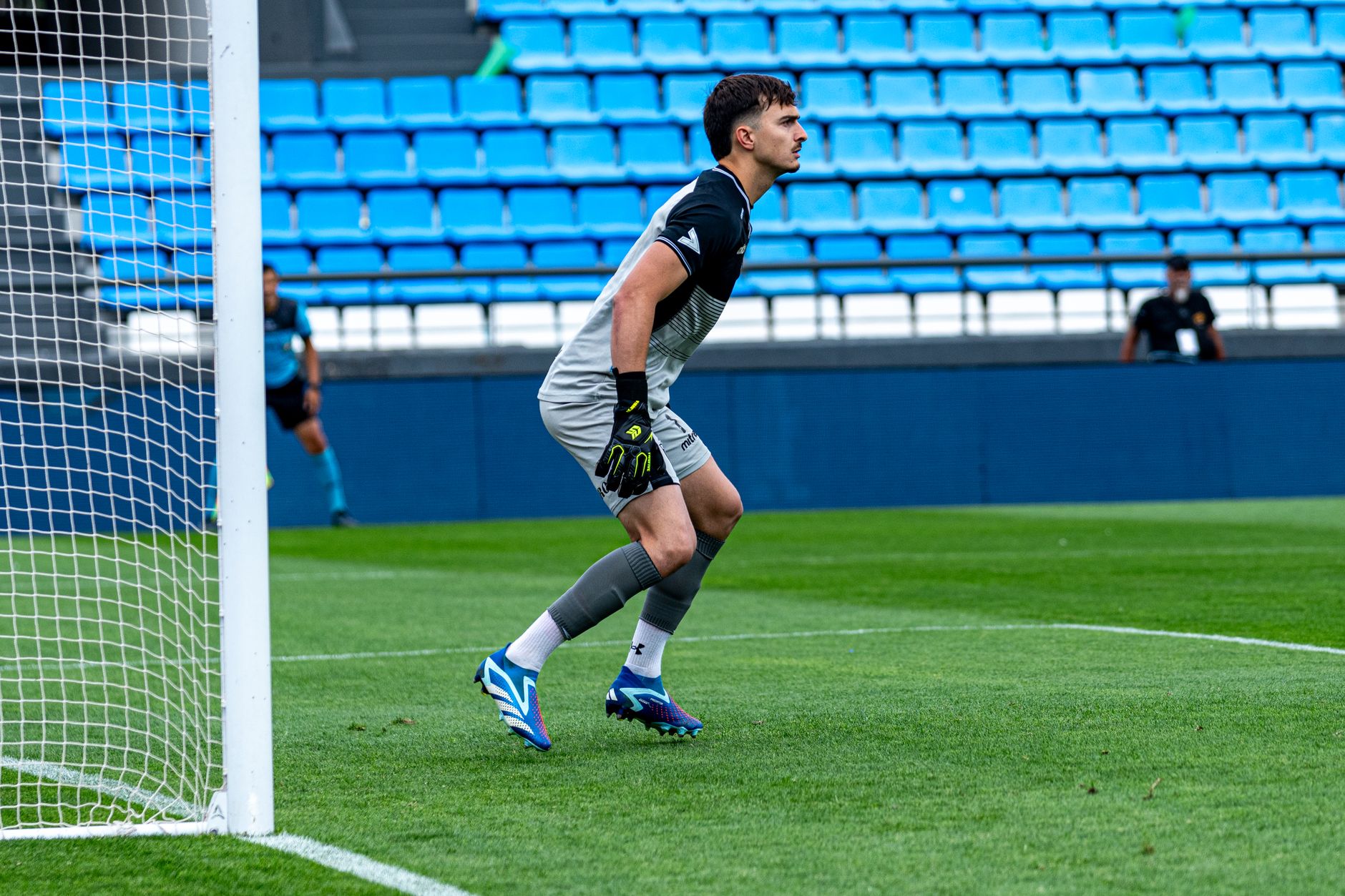
Photo by Franco Monsalvo on Pexels
Verdict
The Algeria national football team is neither the unstoppable golden generation some supporters remember nor a declining side surviving on old reputations. It is a transitional, high-ceiling team built around Mahrez’s elite creativity, Aït-Nouri’s modern width, Mandi’s leadership, and the developing quality of players such as Maza, Chaïbi, and Gouiri. Its 2019 Africa Cup of Nations triumph and 2014 World Cup round-of-16 appearance prove that Algeria can perform on major stages, but those achievements do not remove the current structural questions. The best 2026 assessment is therefore conditional: Algeria can trouble strong opponents if midfield protection and transition defence improve.
For readers following World Cup qualification, Africa Cup of Nations fixtures, or match markets, the sensible approach is to compare confirmed lineups with tactical matchups. Track whether Algeria uses a double pivot, whether Mahrez and Aït-Nouri begin together, and whether the centre-backs have protection in front of them. Those details offer more predictive value than a patriotic headline or a flattering ranking. The veterans may still deliver, but the younger players must turn attractive sequences into measurable output. Football owes us no happy ending, as my betting history has repeatedly demonstrated.
Read the full Match Daily coverage for Algeria’s next fixture and tournament developments.
[Internal Link: 2026 World Cup match predictions]
Frequently Asked Questions
Q: What is the Algeria national football team?
A: The Algeria national football team is the men’s senior side representing Algeria in international football. It is governed by the Fédération Algérienne de Football and competes under the Confederation of African Football. Algeria won the Africa Cup of Nations in 1990 and 2019 and reached the 2014 FIFA World Cup round of 16. Its home colours are traditionally linked with Algeria’s green and white national identity.
Q: How can I follow Algeria’s 2026 matches?
A: Follow Algeria’s fixtures through FIFA, the Confederation of African Football, the Algerian Football Federation, and reputable sports services such as ESPN. Check the official fixture announcement first because kickoff times, venues, and broadcast rights can change. For deeper tactical context, Match Daily can supplement live scores with lineup, formation, and player-form analysis.
Q: Is Riyad Mahrez still important to Algeria?
A: Riyad Mahrez remains important because he provides elite ball progression, chance creation, set-piece quality, and experience in high-pressure matches. The referenced squad data lists him with 2 goals and 1 assist in 4 appearances, demonstrating continued attacking influence in that sample. Algeria should still develop alternative creators so opponents cannot neutralise the entire attack by crowding Mahrez’s side.
Q: What is the difference between Algeria’s 2019 team and its 2026 squad?
A: Algeria’s 2019 team was a proven tournament-winning unit, while the 2026 squad combines experienced survivors with younger players still establishing international consistency. Mahrez remains a major link between the two periods, but players such as Maza, Aït-Nouri, and Chaïbi represent a different developmental cycle. Comparing trophies alone is misleading because squad age, opponents, coaching, and tournament context all change.
Q: What should Algeria improve before a major tournament?
A: Algeria should improve defensive transition control, midfield spacing, and its ability to create against deep defensive blocks. The team must decide who protects the centre when full-backs advance and how quickly it counter-presses after losing possession. Reviewing confirmed lineups, shot quality, turnovers, and goals conceded after attacks will reveal more than possession percentage alone.
Q: Why might Algeria struggle against a high press?
A: Algeria may struggle against a high press if its first passing line becomes isolated and midfielders receive with limited forward options. The goalkeeper, centre-backs, and holding midfielder must create reliable escape routes through switches, diagonal passes, or controlled direct play. If Algeria repeatedly loses the ball centrally, even technically gifted attackers can spend the match defending instead of creating.
Q: Can Algeria win the 2026 FIFA World Cup?
A: Algeria can compete respectably in 2026, but winning the FIFA World Cup would require a major improvement in consistency, defensive control, and knockout-stage execution. Its attacking talent and African experience provide a foundation, while Mahrez, Aït-Nouri, Mandi, and emerging players offer useful balance. A realistic evaluation should wait for qualification status, the final squad, group draw, injuries, and confirmed tactical selection rather than pretending today’s projection is destiny.
END_OF_DISPATCH
Thanks for reading this article from our archive.